

What Are the Best Hair Transplant Methods 2026?
According to dermatologic hair surgery principles, there is no single “best hair transplant method”. The optimal method is determined through a doctor-led evaluation that considers donor area capacity, hair shaft characteristics, scalp anatomy, and long-term hair loss progression of each patient.
Techniques such as FUT, manual or motorized FUE, and DHI each have defined indications, advantages, and limitations when applied to the right patient. Clinical experience and scientific evidence show that successful outcomes depend less on the technique itself and more on accurate diagnosis, meticulous planning, and appropriate technique selection.
For this reason, choosing the right hair transplant method in 2026 is not about following trends, but about combining medical judgment with surgical expertise to achieve natural, sustainable results.
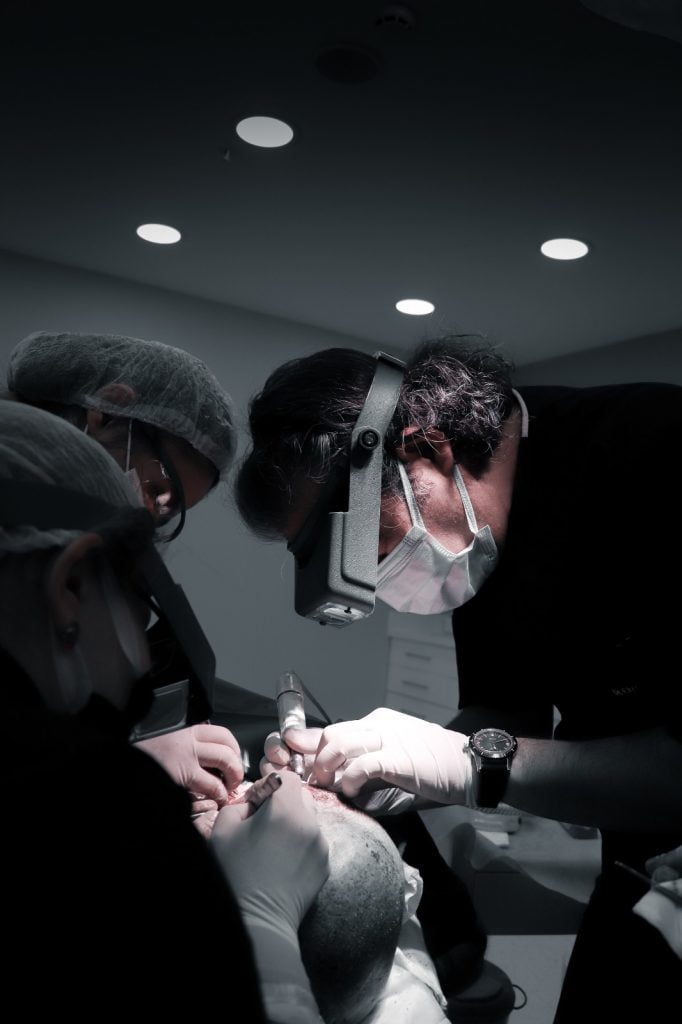
“The Good, the Bad, and the Ugly”… and Hair Surgery
The iconic exchange between Tuco and Blondie in Sergio Leone’s The Good, the Bad and the Ugly is a powerful metaphor for rivalry, mistrust, and ironically, necessary cooperation. Neither character is entirely right or wrong; both possess clear strengths and undeniable weaknesses. Yet in pursuit of a shared goal, they are compelled to work together. Paradoxically, it is these brief moments of cooperation that ultimately lead them to the treasure.
The evolution of hair transplantation over the past two decades is not so different.
Supporters of FUT and traditional FUE were followed by motorized FUE, manual FUE, DHI, long-hair FUE, micropunch technologies, and biotechnologically supported treatments. Each technique has been promoted as superior, each backed by its own rationale and clinical arguments.
Yet the foundations of most of these approaches were established many years ago.
What we understand in 2026 is clear:
- No single hair transplant technique suits every patient.
- Every method carries both strengths and limitations.
The scientific publications and clinical insights we share reflect this reality precisely: the progress of hair surgery is driven by diversity.
For some patients, manual FUE allows greater precision and enhanced graft survival. In other cases, motorized FUE offers efficiency and consistency.
When the appropriate surgical technique is combined with the right medical therapy for the right patient, hair transplant outcomes reach their highest potential.
Much like in the film, the best results are often achieved not by choosing one side, but by integrating the right elements at the right time.
Hair surgery is not a race to crown one universally superior method. It is a careful balance of science and artistry, tailored to the unique needs of each patient.
The Evolution of Modern Hair Transplant Methods
Modern hair transplant methods have evolved through decades of clinical refinement rather than sudden innovation.
Early methods such as FUT established the biological foundations of donor dominance and follicular unit survival. Over time, these principles were adapted into FUE-based approaches, allowing graft extraction without linear scarring.
This evolution continued with the development of manual and motorized FUE, DHI, long-hair FUE, and micropunch technologies. While tools and workflows have changed, the underlying surgical goals, maximizing graft survival, preserving the donor area, and achieving natural aesthetics, remain the same.
Advancements in hair transplant methods 2026 represent not replacements, but refinements of earlier techniques, shaped by surgical experience, research, and improved understanding of hair biology.
Strengths and Limitations of Each Hair Transplant Technique
Each of the commonly used hair transplant techniques is based on the same biological principles but differs in execution, indications, and limitations. Understanding the strengths and constraints of each method is essential for realistic expectations and appropriate technique selection.
FUT (Follicular Unit Transplantation)
FUT is one of the earliest modern hair transplant techniques and involves harvesting a strip of scalp from the donor area.
Strengths:
- Allows the transplantation of a high number of grafts in a single session
- Preserves follicular units with minimal transection when properly performed
- Efficient option for patients with limited donor density
Limitations:
- Leaves a linear scar in the donor area
- Requires sufficient scalp laxity
- Longer healing time compared to FUE-based methods
Manual FUE (Follicular Unit Extraction)
Manual FUE is a refined approach among hair transplant techniques, relying on surgeon-controlled punches for graft extraction.
Strengths:
- High level of tactile feedback and surgical control
- Reduced risk of follicle trauma in experienced hands
- No linear scarring, with minimal dot-like scars
Limitations:
- Time-consuming and physically demanding for the surgeon
- Results are highly dependent on skill and experience of the surgeon
- May not be ideal for very large sessions
Motorized FUE
Motorized FUE uses powered devices to increase speed and consistency during graft extraction.
Strengths:
- Faster extraction compared to manual
- FUE Suitable for larger sessions when carefully planned
- Provides consistent punch movement
Limitations:
- Higher risk of overharvesting if not meticulously controlled
- Reduced tactile feedback compared to manual techniques
- Requires precise planning to preserve the donor area
DHI (Direct Hair Implantation)
DHI Hair Transplant is a technique in which grafts are implanted directly using an implanter pen, with or without pre-made incisions.
Strengths:
- Allows simultaneous incision and implantation
- May be useful in select cases requiring dense packing
- Often preferred for small areas such as eyebrows or beard restoration
Limitations:
- Increased graft handling during loading into implanter pens
- Higher technical complexity and dependence on team experience
- Not ideal for all scalp hair transplant cases
Long Hair FUE
Long Hair FUE is a specialized variation of FUE that allows transplantation without shaving the recipient area.
Strengths:
- Immediate visual preview of hair direction and density
- Suitable for patients who wish to avoid shaving
- Can be beneficial for select cosmetic or social needs
Limitations:
- Technically demanding and time-intensive
- Limited availability and strict patient selection
- Not suitable for extensive hair loss cases
Why Technique Selection Must Be Patient-Specific
From a clinical standpoint, hair transplant methods cannot be applied uniformly to all patients. Factors such as donor area density, hair caliber, scalp laxity, pattern and progression of hair loss, and patient expectations play a decisive role in determining the optimal approach.
A technique that produces excellent results in one patient may be suboptimal in another.
Patient-specific planning also considers long-term hair loss management, ensuring that today’s surgical decisions do not compromise future options.
For this reason, the concept of a single best hair transplant method is misleading; successful hair restoration relies on matching the method to the patient rather than adapting the patient to the method.
The Role of Doctor Experience in Technique Choice
The effectiveness of hair transplant methods 2026 is closely linked to the experience and judgment of the hair transplant surgeon performing the procedure.
Technique selection is not merely a technical decision, but a medical one that requires accurate diagnosis, surgical foresight, and an understanding of long-term outcomes.
Experienced surgeons recognize when to favor precision over speed, when to combine surgical and medical therapies, and when not to operate at all. Ultimately, it is the surgeon’s ability to integrate scientific evidence with hands-on expertise that determines success.
The Civas&Akpınar Philosophy for Selecting Hair Transplant Techniques
At Civas&Akpınar Hair Clinic in Turkey, every hair transplant day begins with a detailed, one-on-one consultation between the patient and our doctors.
Since we dedicate each surgical day to a single patient, there is ample time to carefully evaluate the donor area, hair quality, scalp structure, and the pattern of hair loss. This thorough assessment allows our dermatologists to determine which hair transplant technique is most suitable to achieve natural and long-lasting results.
If you are considering a hair transplant and want a personalized, doctor-led evaluation, book a consultationwith our team and take the first step toward a treatment plan designed specifically for you..
Hair Transplant Methods 2026: FAQs
Q: What is the best hair transplant technique in 2026?
A: There is no single “best” hair transplant technique for everyone. The most suitable method depends on individual factors such as donor area quality, hair thickness, scalp structure, and future hair loss pattern.
Q: Is FUE better than FUT for natural results?
A: When performed correctly, both techniques can produce natural-looking outcomes. The choice depends on donor capacity, scarring concerns, session size, and long-term planning rather than on the technique name alone.
Q: What is the difference between FUE and DHI hair transplant methods?
A: FUE refers to the way grafts are extracted from the donor area, while DHI describes a specific implantation method using implanter pens.
Q: Which hair transplant method gives the highest graft survival rate?
A: Graft survival is influenced more by surgical experience, donor handling, and planning than by the method itself. When performed by an experienced doctor, FUT, manual FUE, motorized FUE, and DHI can all achieve high survival rates in properly selected patients.
Q: How do I know which hair transplant technique is right for me?
A: The correct technique can only be determined after a medical consultation that evaluates your donor area, hair characteristics, scalp anatomy, and future hair loss progression.