


Hair Transplant Surgery: How It Works at Civas & Akpınar (Ankara)
Learn how a hair transplant works, step by step — from your first consultation to final results — with treatment planning and medical decisions led by Dr. Ekrem Civas and Dr. Ümit Akpınar.
✓ Medically reviewed by Dr. Ekrem Civas, Dermatologist and Dr. Ümit Akpınar, Dermatologist · Last updated 2026

- Doctor-led treatment
- One patient per day
- Personalised treatment plan
- Safe & natural results
- Full support before & after
What is a hair transplant, in one paragraph?
Hair transplant surgery moves healthy hair follicles from an area that keeps its hair for life — the back and sides of the scalp, called the safe donor area — to areas that are thinning or bald.
Because those relocated follicles are genetically resistant to hair loss, they keep growing in their new position. It is a minimally invasive, outpatient procedure, and the result depends far less on the machine used than on the surgeon’s plan for your hairline and how carefully your limited donor hair is used. Understanding how many grafts you may need is therefore an important part of planning your treatment.
You can also see before and after hair transplant results to understand how this planning translates into real outcomes.
“A successful hair transplant is not about the number of grafts, but about the right plan for your lifetime.”
The 6 stages of your hair transplant procedure
Every hair transplant procedure at our clinic follows the same six stages. What differs between clinics — and what decides your result — is who performs each stage and how much thought goes into it.
Consultation & candidacy
We assess your hair loss, donor area and overall suitability. Not everyone is a candidate, and we will tell you honestly if you are not.
Hairline design & donor planning
Your hairline is designed for your face, age and future hair loss. We also plan how your donor area will be used across your lifetime.
Anaesthesia
The procedure is carried out under local anaesthesia, so you are awake but comfortable throughout.
Channel creation (incisions)
Tiny sites are created at the correct angle, depth and direction to mimic natural growth.
Graft extraction
Individual follicular units are removed one by one from the donor area with a micro-punch.
Implantation
The grafts are placed into the prepared sites by the surgical team under the direct supervision of your surgeon.
FUE, DHI or Sapphire? How we choose your technique
FUE, DHI and Sapphire FUE are variations on the same modern, minimally invasive approach. We recommend the technique — or combination — that best fits your hair type, graft numbers and goals. Your price does not change based on which one we use.
You can also explore all hair transplant techniques in more detail.
The same price for every technique. Your price is set by your chosen package and graft count — never by the technique used. See our hair transplant pricing for the full breakdown.
A refined technique in experienced hands makes the difference.
- Natural-looking results
- Minimal downtime
- Tailored to your goals
What makes surgery at Civas & Akpınar different?
One patient, one full day
We perform only one hair transplant procedure per day, so your operation has our full focus from the first incision to the last graft.
Both founding surgeons are personally involved
Dr. Ekrem Civas and Dr. Ümit Akpınar are both involved in treatment planning and medical decision-making. Their level of hands-on involvement during surgery depends on the package you choose.
Your donor area is a limited resource
We extract only what is safe and plan around lifetime donor management. Learn more about how graft requirements are calculated.
Are you a candidate for hair transplant surgery?
- Men with male pattern hair loss whose loss has stabilised
- Women with female pattern hair loss and a healthy donor area
- People restoring hair lost to trauma, surgery or burns
- Anyone with an adequate, good-quality donor area and no active scalp condition
It may not be the right time — or the right option — if your hair loss is still rapidly changing, your donor area is limited, or an untreated scalp condition is present. A personalised online consultation can help determine whether surgery is appropriate for you.
Recovery and results: what to expect and when
Scabs form and fall away within about 7–10 days. Transplanted hairs typically shed at around one month before the follicles regrow. New growth usually begins at 3–4 months, most of your result is visible by 6–9 months, and the final outcome matures at around 12–18 months.
See real patient before and after results to see how outcomes develop over time.
How much does hair transplant surgery cost?
Prices start from:
€4,500All-inclusive, set by your chosen package and graft count — never by technique.
Your total depends mainly on the number of grafts you need and the level of surgeon involvement included in your package.
View Pricing & Packages →Who performs your surgery?
Your treatment plan and medical decisions are guided by Dr. Ekrem Civas and Dr. Ümit Akpınar, with the surgical team working under their supervision.
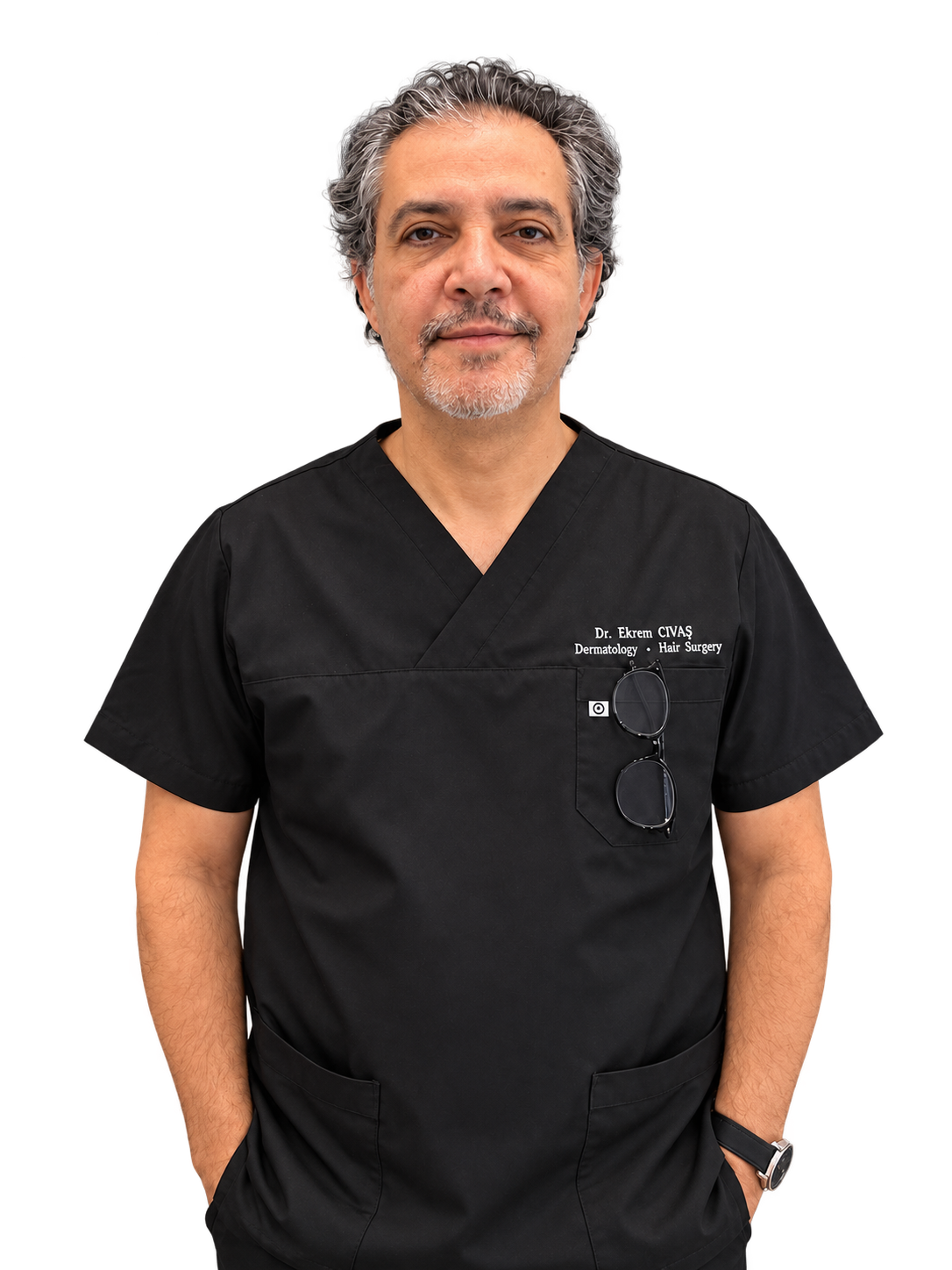
Dr. Ekrem Civas
Dermatologist and hair restoration surgeon
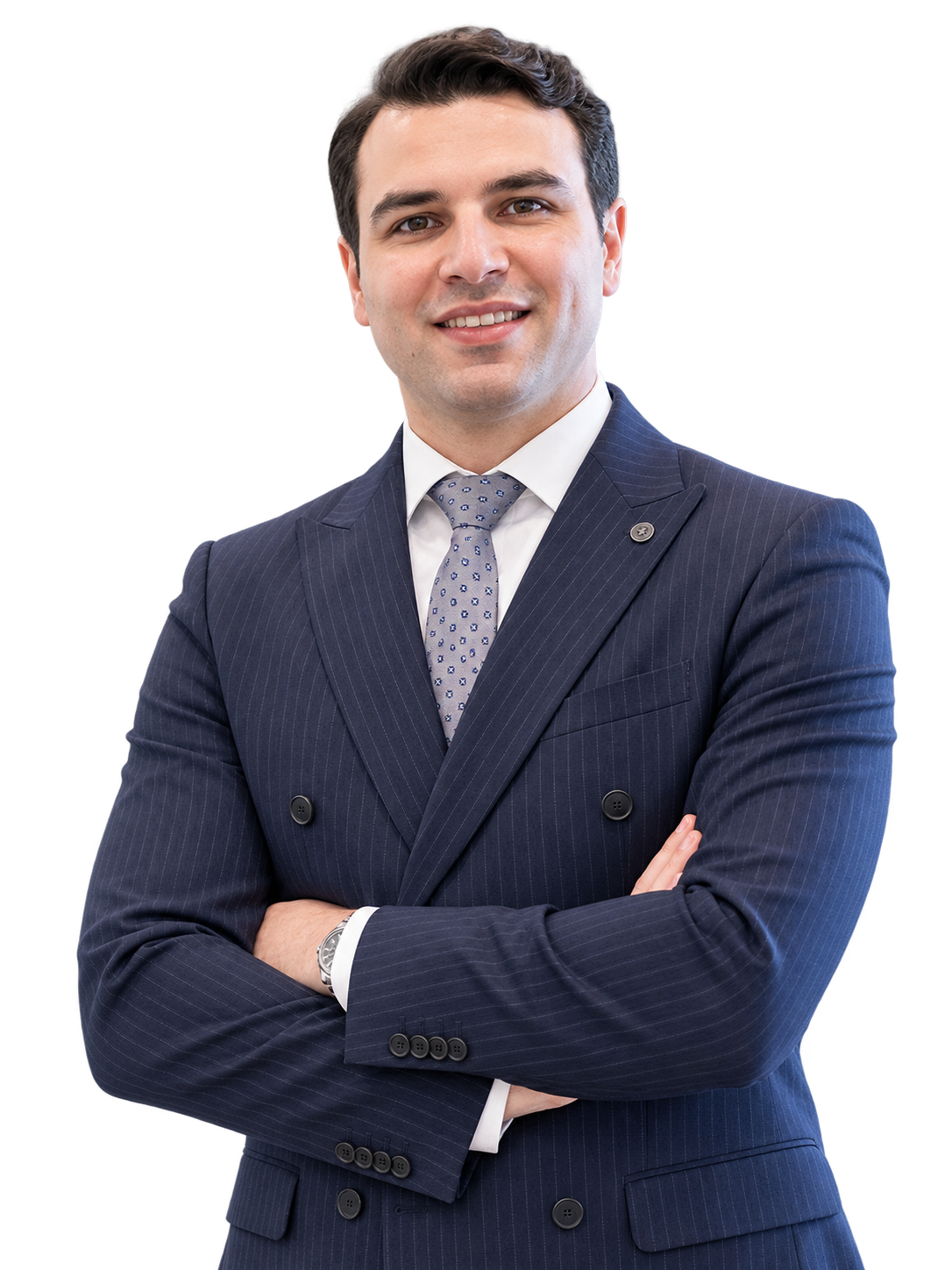
Dr. Ümit Akpınar
Dermatologist and hair restoration surgeon
Learn more about the clinic’s professional affiliations and memberships, or explore real patient results.
Frequently Asked Questions
How does a hair transplant work?
Healthy, loss-resistant follicles are moved from your donor area to thinning or bald areas. The hair transplant procedure follows six stages: consultation, hairline design and planning, anaesthesia, channel creation, extraction and implantation.
How long does hair transplant surgery take?
A procedure takes a full day, around 7–8 hours. We perform only one procedure per day so it is never rushed.
When will I see results?
New growth usually starts at 3–4 months, most of the result shows by 6–9 months, and the final outcome matures at 12–18 months. You can explore patient before and after results for examples.
How much does it cost?
Prices start from €4,500 all-inclusive, set by package and graft count. See our hair transplant pricing page for full details.
What are the main types of hair transplant?
The modern options discussed here are FUE, Sapphire FUE and DHI — variations of the same minimally invasive approach. At our clinic, technique does not change your price.
Is a hair transplant painful?
The procedure is done under local anaesthesia, so you are comfortable throughout. Mild soreness, swelling or numbness afterward is normal and short-lived.
How many grafts will I need?
That depends on your degree of loss, desired density and donor capacity. We extract only what is safe for your donor area rather than the highest possible number. Read our guide on how many grafts are needed for a hair transplant.
Am I a good candidate?
If your hair loss has stabilised and you have a healthy donor area, you may be a candidate. The only way to know for sure is an individual assessment.
Get a personalised assessment from our team
Find out whether a hair transplant is right for you and receive a treatment recommendation based on your case.
Get Your Free Assessment →