


When people notice more strands on their pillow or in the shower, the immediate fear is balding, but the issue is often misunderstanding hair loss vs hair breakage. While they can look similar at first glance, they develop for completely different reasons and require very different care.
Hair that falls out from the root represents true hair loss, whereas strands that snap along the shaft, indicating structural damage to the hair fiber, are known as breakage. Learning to recognize this difference is the first step toward an accurate diagnosis.
In this blog, we’ll explain how to tell hair loss and hair breakage apart, what causes each problem, and which treatments are appropriate for both situations.
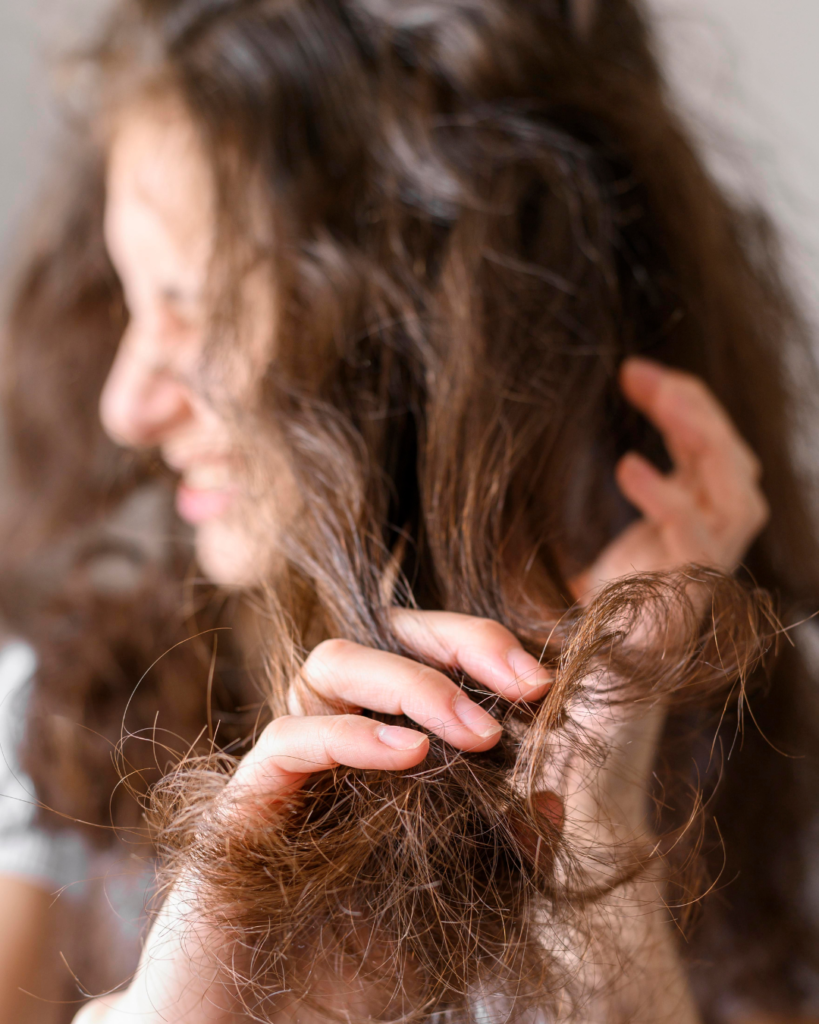
Hair Loss and Hair Breakage: Key Differences
Many people who believe they are losing hair are actually dealing with shaft damage rather than true shedding. These two conditions are frequently confused, yet their origins and their solutions are entirely different.
True Hair Loss
True hair loss occurs when the strand detaches from the follicle at the root. It is commonly associated with hormonal influences, genetic predisposition, stress, or underlying medical conditions that affect the hair growth cycle.
Hair Breakage
Hair breakage, on the other hand, happens when the hair fiber becomes weak and snaps along its length.
Because the management of each condition differs significantly, making an accurate distinction is essential before starting any treatment or care routine.
Why Hair Breaks: Understanding the Structure/Anatomy of Hair
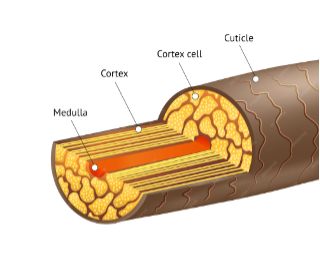
To understand why strands either fall from the root or snap along their length, it helps to first know the structure of a hair strand. The hair shaft is made of three main layers: the cuticle, cortex, and medulla. And each one plays a role in strength, elasticity, shine, and overall appearance..
Cuticle
The cuticle is the outermost protective layer, formed by overlapping scale-like cells. It shields the inner structure from friction, heat, and environmental stress while helping maintain moisture balance.
Its surface contains a natural lipid coating called 18-MEA (18-Methyleicosanoic Acid), which repels excess water and reduces static.
When this protective barrier is damaged:
-
- Hair becomes frizzy
-
- Hair appears dull
-
- Fragility increases
-
- Strands snap more easily
Cortex
The cortex makes up the majority of the hair shaft and determines mechanical hair strength and flexibility. It contains tightly organized alpha-helix proteins and macrofibrils and is maintained by chemical bonds, mainly disulfide and hydrogen bonds.
Procedures such as bleaching, coloring, perming, or straightening can weaken these bonds, reducing elasticity and making the hair more prone to snapping and visible thinning.
Medulla
The medulla is the innermost core, typically present in thicker strands and often absent in fine hair. Compared with the cortex, it has a limited role in strength but contributes slightly to the overall structure of the fiber.
Differences Between Hair Loss vs Hair Breakage
Although they may look similar, telling apart hair loss and hair breakage is usually straightforward. The key clue is the tip of the strand: whether a visible root bulb is present or not.
Hair Breakage
If the strand has no white bulb and looks snapped or uneven, this points to signs of hair breakage. The follicle remains in the scalp, meaning the problem is damage along the hair shaft rather than true hair loss.
Common causes of hair breakage:
-
- Frequent heat styling
-
- Chemical treatments (dyeing, bleaching, straightening)
-
- Aggressive brushing or mechanical trauma
-
- Inappropriate hair care products
Telogen Effluvium (TE) or Hair Loss
If the strand has a small white, bulb-shaped end, it reflects signs of hair loss, most commonly a condition called telogen effluvium. In this situation, the hair completes its growth cycle and sheds from the root.
Typical triggers of Telegon Effluvium include:
-
- Intense stress
-
- Fever or illness
-
- Postpartum period
-
- Rapid weight loss
-
- Hormonal changes
Here, the follicle shifts from the active growth phase into the resting (telogen) phase before the hair is released, which is why patients often suddenly notice increased shedding.
Quick Check: Hair Loss or Hair Breakage?
You likely have hair loss if:
-
- Hairs fall with a white bulb
-
- Increased shedding in shower
-
- Thinning at scalp
-
- More hairs on pillow
You likely have hair breakage if:
-
- Short uneven strands
-
- No white bulb
-
- Split ends
-
- Hair won’t grow long
Hair Loss vs Hair Breakage: Why Correct Diagnosis Comes First?
Unlike true shedding, hair thinning caused by breakage is usually reversible with proper care and habit changes.
When strands fall from the root (in cases of true hair loss), however, the situation necessitates an investigation into the causes of hair loss.
For this reason, an accurate dermatological evaluation is essential to determine whether it is hair loss or hair breakage before starting treatment.
What Causes Hair Breakage?
Most structural damage from hair breakage results from daily grooming practices rather than disease. Typical triggers include:
-
- Harsh shampoos or washing hair too frequently
-
- Excessive friction while brushing
-
- Chemical treatments (dye, bleach, relaxer)
-
- Frequent heat styling (straighteners, curling irons)
What Weakens Hair Fiber, leading to Hair Breakage?
A major reason hair strands snap is the loss of the protective lipid layer known as 18-MEA. When this barrier is disrupted:
-
- Hair absorbs excess water and swells
-
- Elasticity decreases
-
- Frizz and static increase
-
- Strands break more easily
Factors that damage this layer:
-
- Sulfate-containing shampoos (SLS, SLES)
-
- Rough towel drying
-
- Repeated chemical processing
-
- Aggressive heat styling
These changes weaken the surface integrity of the hair, leading to dull, dry, fragile hair. The choice of hair products and application method are therefore critical to prevent breakage.
Choosing the Hair Products to Prevent Breakage
Best Shampoo Habits to Prevent Damage
Shampoo should cleanse without stripping protection. Harsh formulas remove surface lipids and worsen fragility, so gentle or sulfate-free cleansers are preferred when trying to prevent signs of hair breakage.
Best Conditioner Habits for Stronger Hair
Conditioners smooth the hair surface, reduce friction and protect the cuticle layer. Benefits of using conditioners include:
-
- Neutralizing negative static charge
-
- Protects the cuticle and mimics the lipid layer
-
- Reduces friction for easier combing
-
- Prevents hair breakage
Effective conditioner formulas often contain dimethicone, cationic polymers, and hydrolyzed keratin that coat the hair shaft and reinforce structure.
Which Oils Help Protect the Hair?
Coconut Oil
Coconut oil penetrates the shaft, reduces protein loss, and strengthens structure, making it especially useful in preventing mechanical damage. It provides effective protection for both healthy and damaged hair.
Other Oils (Argan, Olive, Mineral Oil)
Oils like argan, olive, and mineral oil mostly form a thin film on the hair surface. While they offer some protection from external factors, they do not penetrate the hair protein, so their protective effect is limited compared to penetrating oils.
How Brushing and Combing Affect Hair Strength
Daily grooming techniques play a major role in hair breakage. Improper brushing and combing techniques can cause breakage along both hair ends and mid-lengths.
-
- Dry combing: causes breakage , specially at the ends
-
- Wet combing: mid-shaft snapping due to reduced hair strength
Why Curly and Afro Hair Breaks More Easily?
There is a higher risk of breakage in curly and afro hair. Curly hair are structurally more prone to breakage due to:
-
- Thinner cuticle layer
-
- Elliptical hair fiber shape
-
- Uneven natural oil distribution
-
- Increased friction during brushing
Gentle handling, correct product selection and regular hair care are crucial to avoid progressive thinning caused by damage.
Effects of Straightening and Other Chemical Treatments on Hair Breakage
Chemical treatments affect internal bonds in hair, reducing strength. Effects may vary based on method and hair type.
-
- Lye / No-Lye Relaxer: Provides permanent straightening but breaks disulfide bonds, increasing fragility
-
- Thioglycolate: Offers temporary straightening, causing less protein loss
-
- Brazilian Keratin Treatment (BKT): Makes hair smooth and shiny, but contains formaldehyde, posing respiratory and genotoxic risks; smoothing effect rather than full straightening
Combining chemical treatments such as bleaching, relaxing, and smoothing procedures greatly increases fragility and hair breakage.
Leave-In Products That Protect Fragile Hair
Leave-in hair formulations can reduce mechanical stress and protect fragile hair. Products containing acrylate polymers and dimethicone:
-
- Form a protective film
-
- Reduce friction during brushing
-
- Improve surface smoothness
Hair products containing dimethicone and acrylates copolymer help prevent progressive damage that patients often mistake for shedding.
Daily Hair Care Routine to Reduce Damage
-
- Use a mild sulfate-free cleanser or shampoo
-
- Apply conditioner after each wash
-
- Use leave-in products on damp hair
-
- Apply coconut oil weekly
-
- Use a silicone-based heat protectant before styling
-
- Avoid rought towel drying, dry hair gently instead of rubbing
Following this hair care routine helps prevent structural damage and supports healthier growth.
How to Keep Hair Strong and Healthy?
To maintain strong, resilient hair and reduce the risk of breakage:
-
- Understand your hair structure and choose products accordingly
-
- Minimize heat styling and always use a heat protectant
-
- Avoid harsh shampoos that strip natural protective lipids
-
- Apply conditioner after every wash to reduce friction
-
- Use leave-in products to support fragile strands
-
- Be gentle when brushing, especially when hair is wet
-
- Limit chemical treatments such as bleaching or relaxing
-
- Incorporate protective oils, such as coconut oil, when appropriate
-
- Seek dermatological evaluation if you notice persistent shedding from the root
Following consistent, gentle care habits helps preserve hair strength and prevent unnecessary thinning over time.
Does Broken Hair Grow Back?
Yes. Broken hair grows back because the follicle in the scalp is still alive. Breakage damages only the hair shaft, not the root, so the natural growth cycle continues.
Many people think their hair stopped growing, but the new hair growing from the scalp keeps snapping at weak ends. This creates uneven length and the illusion of no growth.
Once heat, chemicals, or friction are reduced, healthy strands grow normally again. With proper care and time, the length can fully recover.
Can Hair Breakage Cause Hair Thinning?
Yes, hair breakage can make hair look thinner, but it is not true hair loss. When strands snap along the shaft, fewer full-length hairs remain, so the scalp becomes more visible. The number of follicles stays the same; the hairs are simply shorter and uneven. Because follicles are active, this thinning is usually reversible. If hairs fall from the root as well, a medical evaluation is needed to rule out real hair loss.
Hair Loss vs Hair Breakage: Expert Insights from Dermatologists at Civas&Akpınar
From a dermatological perspective, distinguishing between hair loss and hair breakage is the most critical step before starting any treatment. During the consultation at Civas&Akpınar Hair Transplant, specialists evaluate the scalp clinically and analyze the hair shafts and follicles using trichoscopy, a magnified examination that allows us to see whether hairs are shedding from the root or fracturing along the shaft. This helps identify conditions such as telogen effluvium, androgenetic alopecia, or purely mechanical damage.
If true hair loss is diagnosed, medical therapies, and in suitable candidates, hair transplantation, may be considered.
However, if the problem is breakage, treatment focuses on restoring hair fiber integrity and correcting damaging habits rather than stimulating new growth.
Not sure which one you’re experiencing? A professional scalp analysis can clarify it in minutes and prevent months of incorrect treatment. Contact Civas&Akpınar for an expert evaluation.
Hair Loss vs Hair Breakage: FAQs
Q: How can I tell if my hair is shedding or breaking?
A: You can usually tell the difference by examining the strand: shed hairs that fall from the root have a small white bulb on the end, while broken hairs are shorter with blunt or frayed tips, showing damage along the shaft. This simple root test is the most reliable way to distinguish hair loss vs hair breakage.
Q: What are the common causes of hair breakage?
A: Hair breakage is most often caused by external damage to the hair shaft, such as frequent heat styling, chemical treatments (bleaching, coloring, relaxing), aggressive brushing, or tight hairstyles.
Q: What causes true hair loss compared to hair breakage?
A: True hair loss involves follicles shedding hairs from the root and may be linked to hormonal changes, genetics, stress, medication, illness, or nutritional deficiencies. In contrast, breakage affects the strand itself and is usually related to hair care practices or damage to the hair shaft.
Q: Will broken hair grow back to the same length?
A: Yes, hair that has snapped off due to breakage can grow back from the follicle at the normal rate as long as the damage source is removed and the scalp remains healthy.
Q: When should I see a dermatologist about hair thinning?
A: If you notice persistent shedding from the root, sudden thinning of hair across the scalp, or balding patches, professional evaluation is important. A dermatologist can determine whether you are experiencing true hair loss or hair breakage, and recommend appropriate medical treatments, including therapies or, in some cases, hair transplant options..