

Exosome Hair Transplant: Can Regenerative Therapy Enhance Your Results?
Exosome hair transplant has become a very popular concept in modern hair restoration, as patients, doctors and researchers explore whether regenerative therapies can enhance surgical outcomes.
While traditional hair transplantation remains the most reliable permanent solution for androgenetic alopeciaand other forms of hair loss, exosome-based treatments have gained attention for their potential role in supporting healing, improving follicle vitality, and optimising the overall recovery environment.
Before evaluating whether exosome therapy for hair growth is appropriate, it is essential to understand how exosomes work and how they may (or may not) influence hair transplant results..
Hair Transplantation and Regenerative Treatments
Hair transplantation remains one of the most effective long-term solutions for restoring hair in patients with androgenetic alopecia and other forms of hair loss. However, even a well-performed procedure faces certain challenges, such as maintaining graft survival, supporting recipient-site healing, protecting the donor area, and ensuring the long-term health of the transplanted follicles.
This is where regenerative approaches, including exosome therapy for hair loss are gaining attention. When combined strategically, an exosome hair transplant could help bridge the gap between surgical technique and overall clinical results.
For this reason, modern hair transplant surgeons should understand the regenerative treatments available today, their potential roles, and how these therapies may help enhance both short- and long-term hair transplant outcomes.
What Are Exosomes?
Exosomes are tiny extracellular vesicles released by nearly all cells in the body. Think of them as biological messengers: they carry proteins, lipids, growth factors, and genetic material that allow cells to communicate and influence each other’s behavior.
In regenerative medicine, exosomes and hair transplant have gained attention because of their potential to support tissue repair, modulate inflammation, and influence the surrounding microenvironment, all factors relevant to hair follicle health.
How Exosomes Are Formed?
Exosomes are produced inside cells through a multi-step process in which intracellular compartments package signaling molecules into small vesicles. These vesicles are then released into surrounding tissues, where they interact with nearby or distant cells.
Exosomes vs. Stem Cells: What’s the Difference?
Although often grouped together, exosomes are not stem cells. Stem cells can divide and differentiate. Exosomes cannot. Instead, exosomes deliver signals that may influence how existing cells behave. This is an important distinction, especially when comparing exosome therapy with cell-based interventions such as PRP, stromal vascular fraction (SVF), or autologous micrografts.
Why Exosomes Are Being Studied in Regenerative Medicine?
Researchers are interested in exosomes because they appear to play roles in:
- Reducing inflammation
- Promoting angiogenesis (new blood vessel formation)
- Modulating immune response
- Supporting tissue repair and remodeling
Exosome therapy for hair growth is being explored partly because it may help maintain a healthy follicular microenvironment, although evidence is still in the early stages.
What Is Exosome Therapy for Hair Growth?
Exosome hair therapy is an emerging regenerative treatment that uses exosomes, microscopic vesicles released by stem cells, to transport growth factors, cytokines, and signaling molecules.
These particles act as messengers between cells and may play a role in tissue repair, inflammation control, and cellular communication.
The purpose of exosome hair transplant is to potentially create a more supportive environment for hair follicles. While the concept is promising, the scientific community is still investigating how effective exosomes truly are for promoting hair growth. Current research offers possibility, not certainty, and this distinction is essential for patients.
How Is Exosome Therapy for Hair Loss Administered?
Exosome hair therapy is typically delivered through:
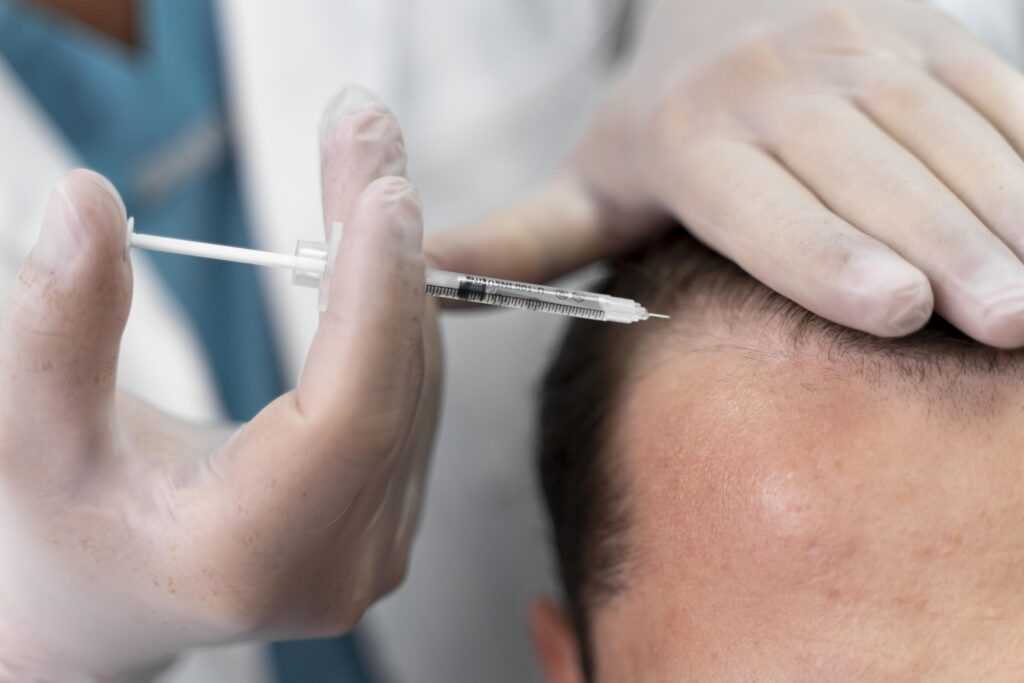
- Scalp injections: The exosome solution is usually delivered through a series of micro-injections similar to PRP or mesotherapy.
- Topical application during micro-injury: Sometimes combined with microneedling to enhance absorption.
- Exosomes after hair transplant: In some clinics, exosomes are applied following hair transplantation.
It’s important to understand that exosome products vary significantly from one provider to another. Because exosome therapy for hair loss is still under investigation, there is no universally accepted protocol regarding dosage, concentration, or number of sessions.
Patients should always consult a qualified medical professional to determine whether exosomes and hair transplant is appropriate for their situation.
Proposed Mechanisms for Hair Follicle Support
Although there is no definitive proof yet, scientists propose several possible mechanisms by which exosome hair treatment might support hair follicles:
- Reduces inflammation that contributes to follicle miniaturisation.
- Delivers signaling molecules that may help maintain follicle health.
- Promotes tissue repair following scalp injury or surgical procedures.
- Supports vascular activity that could improve scalp environment.
Exosome Hair Transplant: What Is It?
The term exosome hair transplant is becoming increasingly popular online, but it can be misleading. There is no standalone procedure called an “exosome hair transplant.” Instead, this phrase typically refers to a traditional hair transplant (FUE or DHI) combined with exosome hair therapy as an optional adjunct treatment.
In most cases, exosomes are either:
- administered during the transplant to the recipient area,
- applied after the procedure to support healing,
- or injected before surgery as a scalp-conditioning treatment.
It’s important for patients to understand that exosomes do not replace surgical grafting, nor do they create new follicles. The core transplant procedure, harvesting, preparing, and implanting hair grafts, remains exactly the same.
Exosomes and Hair Transplant: How Does It Work?
Exosomes can be administered in conjunction with a hair transplant either during the procedure or post-operatively. When used during surgery, they are typically applied to the recipient area after grafts are placed, to potentially support graft survival, reduce inflammation, and optimizing the scalp microenvironment. Application of exosomes after hair transplant may involve injections or topical delivery to the transplanted and surrounding areas to further encourage tissue repair and hair follicle health.
How Exosome Hair Transplant Might Influence Healing and Inflammation
While exosome hair transplant is still considered experimental, some proposed theories suggest how it might influence the post-operative environment:
1. Modulating Inflammation in the Recipient Area
After a hair transplant, the scalp undergoes a controlled inflammatory healing process. Exosomes are thought to contain anti-inflammatory cytokines that may help regulate this response, potentially reducing redness, swelling, or irritation.
2. Supporting Cellular Communication in Healing Tissues
Exosomes function as messengers between cells. In theory, applying exosomes after hair transplant may enhance communication within the healing tissue, signaling regenerative processes such as improved angiogenesis (blood vessel formation) or wound repair.
3. Potential Role in Microenvironment Optimization
Some researchers believe exosomes could help create a more favorable environment around newly implanted grafts by reducing oxidative stress or supplying growth-related factors.
4. No Evidence of Direct Regrowth of Transplanted Grafts
Crucially, there is no scientific evidence showing that exosomes cause transplanted follicles to grow thicker, faster, or more densely. The potential of exosome hair transplant is theoretical and must be approached with caution, especially given the variability between commercially available exosome products.
Are There Proven Benefits of Exosome Hair Transplant? What We Know So Far..
Although exosome therapy for hair growth is gaining attention in hair transplantation, clinical evidence is still limited:
- Preclinical studies suggest exosome hair transplant can stimulate follicle cell proliferation and support hair growth cycles.
- Early clinical trials report small increases in hair density and thickness, but these studies are short-term and include small patient groups.
- No large-scale, long-term trials have definitively proven that exosomes improve hair transplant outcomes.
Comparing Exosome Hair Transplant With Other Adjunct Treatments
Hair restoration often includes various adjunct therapies aimed at improving graft survival, hair density, and scalp health. Exosomes after hair transplant are one such approach, but it’s important to understand how it compares to other widely used treatments.
Exosomes vs. PRP (Platelet-Rich Plasma)
Both exosomes and PRP are regenerative therapies, but they differ in origin and potential mechanisms:
- PRP uses the patient’s own blood platelets, which release growth factors to stimulate hair follicles.
- Exosomes are derived from donor stem cells and carry a wider variety of signaling molecules, potentially offering more targeted regenerative effects.
Exosomes vs. Stem Cell Therapies
Stem cell therapies involve transplanting live cells that can differentiate and potentially regenerate hair follicles. Exosomes do not contain live cells but deliver signaling molecules that may influence follicle behavior.
In some ways, exosomes can be considered a “cell-free” alternative to stem cell treatments, potentially reducing some risks associated with live cell therapy. However, stem cell treatments currently have slightly more robust preclinical data than exosome hair therapy.
Safety, Regulations, and Ethical Considerations of Exosome Hair Transplant
Exosome hair therapy, like any experimental treatment, comes with important safety and regulatory considerations. Understanding these factors is essential before considering an exosome hair transplant.
FDA and International Regulatory Status of Exosome Hair Treatment
In the United States, exosomes are not FDA-approved for hair loss treatment. Their use is typically restricted to research settings under an Investigational New Drug (IND) application.
Similarly, Health Canada and other regulatory bodies classify exosomes as experimental therapies requiring strict oversight.
Clinics outside North America may offer exosome hair treatments more freely, but regulatory standards can vary widely. As mentioned earlier, exosomes are considered adjunctive and experimental. No country currently endorses exosome hair transplant.
Quality Control Concerns in Exosome Products
Exosome preparation can differ depending on cell source, isolation method, and storage, leading to variable potency and purity. Contamination or inconsistent product quality is a potential risk if proper lab protocols are not followed.
Why Proper Medical Oversight Is Important
Trained clinicians can monitor for adverse reactions, such as inflammation or infection. Expert guidance ensures that exosome therapy is applied safely in conjunction with hair transplant procedures. Oversight also helps set realistic expectations regarding outcomes and limitations of current research.
Current Evidence and Limitations of Exosome Hair Transplant
Research on exosomes and hair transplant is still in early stages. Current limitations include:
- Lack of large, controlled human studies
- Significant variation in product quality across manufacturers
- Unclear dosing, handling, and application protocols
- Unregulated market with inconsistent safety data
- No long-term results demonstrating sustained hair growth
While early anecdotal reports appear positive, there is not enough scientifically validated data to confirm that exosome hair transplant reliably treats hair loss or improves transplant outcomes.
Should You Combine Exosomes and Hair Transplant?
Combining exosome therapy with a hair transplant is an emerging approach. While theoretically promising, exosome hair transplants remain largely experimental.
What Current Studies About Exosome Hair Transplant Suggest
Early studies and preclinical research suggest that exosome hair transplant may support hair follicle regeneration, reduce inflammation, and improve the microenvironment of the recipient area.
Some small clinical trials show modest increases in hair density and thickness when exosomes after hair transplant are applied.
What Remains Unclear
- The ideal timing, dosage, and method of exosome application for hair transplant patients are not yet standardized.
- Long-term safety and efficacy data are lacking.
- Whether exosome therapy significantly improves graft survival or long-term hair density compared to standard care remains unproven.
Doctor Perspective: When Might Exosome Hair Transplant Be Considered?
Exosome hair transplant may be considered on a case-by-case basis, particularly in situations where the scalp environment, follicular health, or regenerative capacity may be compromised. These cases reflect the pathophysiological basis for using experimental regenerative methods in hair restoration and why some surgeons explore exosomes and hair transplant techniques.
Epigenetic and Environmental Stressors
Even though transplanted hair follicles are generally resistant to dihydrotestosterone (DHT), other epigenetic and environmental factors can still influence their long-term health. Pollution, poor nutrition, smoking, chronic stress, sleep disorders, excessive alcohol intake, oxidative stress, and certain medications may weaken transplanted hairs over time.
In such cases, exosomes are theorized to help support the follicular microenvironment through their anti-inflammatory and signaling properties.
Age-Related Thinning (Senile Alopecia)
Chronological aging naturally reduces the follicular stem cell pool, weakening both native and transplanted hairs. This can lead to thinner, weaker, or shorter hair shafts years after a transplant.
Because exosomes are proposed to encourage cellular communication and support tissue repair, exosome hair transplant may be explored in older patients who want to enhance scalp vitality.
Damage From Hair Care Practices
Frequent heat styling, harsh chemical treatments, or excessive traction can damage both existing and transplanted hair shafts.
In these instances, regenerative treatments, including exosome therapy for hair growth, are sometimes considered for their potential to optimize the follicular niche and support healthier hair cycling.
A qualified surgeon can weigh potential benefits against the limitations of exosome hair transplant and help patients make an informed decision.
Civas&Akpınar Hair Transplant Clinic’s Approach
At Civas&Akpınar Hair Transplant Turkey, patient safety and evidence-based care remain the top priority when considering new treatments such as exosome hair transplant.
Evidence-Based and FDA-Approved Treatments Only
Our clinic focuses on techniques with demonstrated efficacy, such as FUE and DHI hair transplants and FDA-approved hair loss treatments, such as Minoxidil, Finasteride, and Laser Therapy.
Why We Prioritize Proven Techniques
Proven methods ensure predictable outcomes and patient safety. They minimize the risk of poor graft survival, infection, or unnecessary costs associated with experimental treatments.
How We Guide Patients When Considering Experimental Therapies
At Civas&Akpınar, we provide detailed counseling on potential benefits, limitations, and uncertainties of therapies like exosomes and hair transplant. We encourage informed decision-making and ensure any experimental approach is applied under strict medical supervision.
FAQs About Exosome Hair Transplant
Are exosomes approved for treating hair loss?
No, exosome hair transplant is currently experimental and not approved by the FDA or most international regulatory bodies for hair loss.
Can exosome hair therapy guarantee better hair transplant results?
No. Current evidence is limited, and there is no guarantee that exosome hair treatment improves hair transplant outcomes.
How soon can someone consider exosomes after a hair transplant?
Timing varies. If considered, a doctor usually waits until the initial healing phase is complete to reduce risks of infection or interference with grafts.
Is exosome hair transplant painful?
Exosome injections are generally minimally invasive, but patients may experience mild discomfort or scalp tenderness.
How long do exosome effects last?
The duration of the effect of exosome hair therapy is unknown due to limited clinical data and lack of long-term studies.
Are there risks or side effects to exosomes hair transplant?
There are risks of possible scalp irritation, mild inflammation, or infection. Risks increase if product quality or sterility is not assured. As previously mentioned, strict medical oversight while using exosome therapy for hair growth is critical.
Who should avoid exosome hair transplant?
Patients with active scalp infections, uncontrolled systemic diseases, or allergies to product components and anyone expecting guaranteed results should avoid exosome hair transplant.
How do I choose a clinic offering exosome hair transplant?
Ensure the clinic has experienced hair transplant surgeons. Seek clinics that prioritize patient safety and evidence-based guidance rather than marketing hype.