


One of the most common questions among patients considering a hair transplant is: “How many grafts do I need: 3000, 4000, or 5000?” Determining the ideal graft number for hair transplant is a key part of achieving natural and long-lasting results.
Comparisons such as 3000 vs 4000 grafts or 4000 vs 5000 grafts are frequently discussed, often with the assumption that a higher number automatically leads to better density. However, in reality, the ideal graft number for hair transplant is not a fixed figure. It varies significantly depending on factors such as the extent of hair loss, donor area quality, and long-term hair restoration planning.
In this blog, we will explore the differences between 3000, 4000, and 5000 grafts, what is considered a safe number of grafts for hair transplant, and why the maximum number of grafts for hair transplant is not always the best approach for achieving natural, sustainable results..
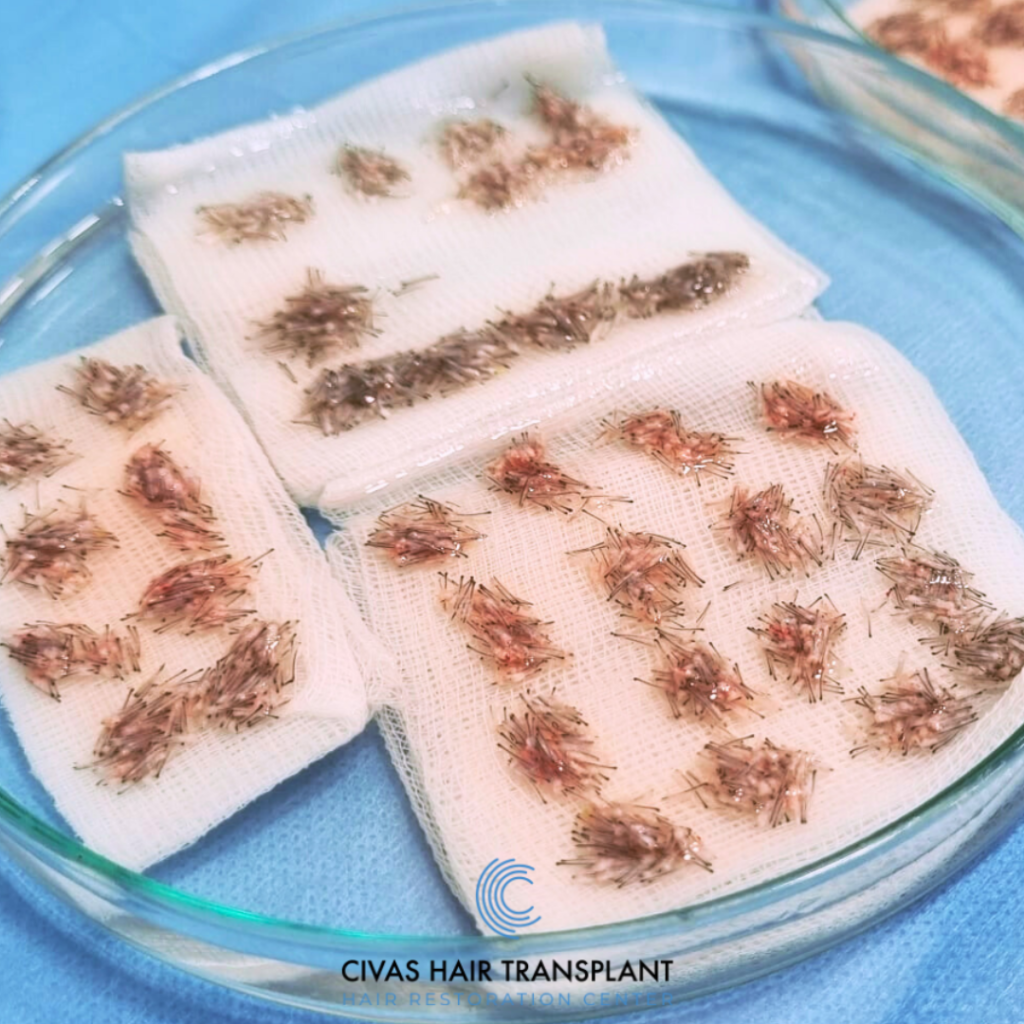
What Is a Hair Graft?
A hair graft is the fundamental unit used in hair transplant surgery. It is a naturally occurring group of hair follicles, typically containing between 1 and 4 hairs, along with the surrounding tissue that supports their growth.
It is important to understand that grafts and hairs are not the same. For example, 3000 grafts do not equal 3000 hairs, they may represent anywhere from 6000 to 9000 hairs depending on the composition of each graft.
This is one reason comparing 3000 vs 4000 vs 5000 grafts based on numbers alone can be misleading. In practice, the visual outcome depends not only on the number of grafts, but also on how many hairs they contain and they are distributed.
What Determines the Ideal Graft Number For Hair Transplant?
The ideal graft number for hair transplant is not determined by a single factor. It is the result of a detailed, individualized assessment that considers both medical and aesthetic variables. Key factors include:
- Patient expectations: The desired level of density and coverage plays a major role in planning. Realistic expectations are essential for achieving a natural result.
- Donor area density: The number and quality of available grafts in the donor area directly limit how many grafts can be safely extracted.
- Size of the balding area: Larger areas of hair loss require more grafts, but also more strategic distribution to maintain a natural appearance.
- Future hair loss progression: Hair loss is often progressive. Planning must account for potential future thinning to avoid unnatural patterns over time.
- Family history of hair loss: Genetic patterns can help predict how hair loss may evolve, influencing long-term graft planning.
- Hair characteristics (thickness, texture, and color): Thicker or curly hair provides better coverage, while contrast between hair and skin color can affect the perception of density.
- Skin type and color: These factors influence how dense or natural the final result appears visually.
When these factors are evaluated together, it becomes much clearer what the ideal graft number should be for each patient. This is why a standardized approach, such as choosing between 3000, 4000, or 5000 grafts without proper assessment, can lead to suboptimal results.
3000-Graft Hair Transplant: Who Is It Suitable For?
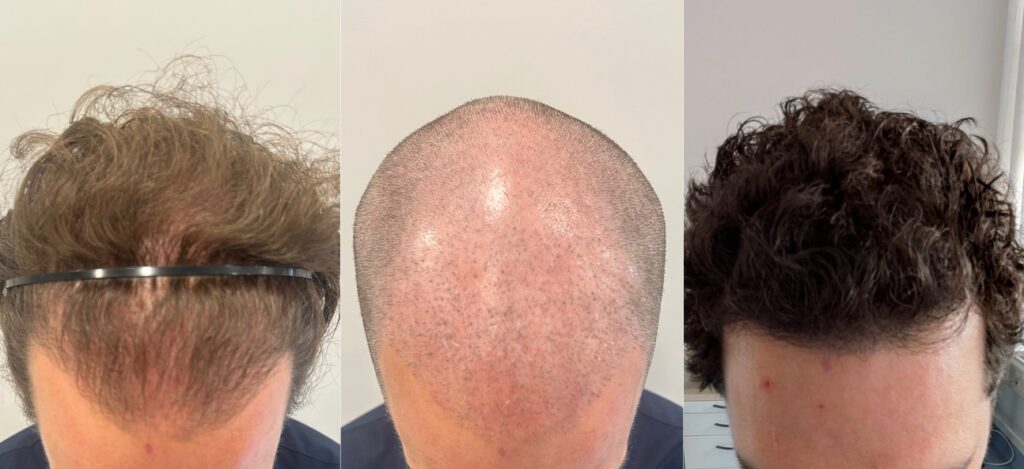
A 3000-graft hair transplant is often sufficient for patients with mild to moderate hair loss, particularly those experiencing recession in the frontal hairline or thinning in the front and mid-scalp areas. When properly planned, this range can provide:
- A natural-looking hairline
- Balanced density in targeted areas
- Preservation of the donor area for future needs
In fact, many experienced surgeons consider 3000–3500 grafts to be within a safe and effective range for a single session, depending on the patient’s donor capacity and hair characteristics. This allows for optimal graft survival while minimizing the risk of overharvesting.
It is important to understand that success at this level depends heavily on strategic graft placement. By using single-hair grafts in the hairline and multi-hair grafts in areas requiring more density, it is often possible to achieve results that appear fuller than the raw graft number might suggest.
However, 3000 grafts may not be sufficient for patients with more advanced hair loss or larger bald areas. In such cases, careful prioritization and long-term planning become essential.
4000-Graft Hair Transplant: When Is It Needed?
A 4000-graft hair transplant is typically recommended for patients with moderate to more advanced hair loss, where both the hairline and mid-scalp require coverage. This range allows for a broader area to be treated while still aiming to maintain a natural appearance.
Compared to 3000 grafts, this level can provide:
- Increased coverage across larger thinning areas
- Improved overall density
- A more comprehensive restoration in a single session
However, moving into this range requires more careful planning. As the number of grafts increases, so does the importance of:
- Donor area management
- Efficient extraction and implantation
- Minimizing the time grafts remain outside the body
Longer procedures may also increase fatigue for both the surgical team and the patient, and extended graft handling time can affect survival rates if not managed properly.
For many patients, 3000-4000 grafts represents an optimal balance, providing significant visible improvement while staying within a safe number of grafts for hair transplant in a single session.
The key is ensuring that the donor area is not overexploited and that grafts are distributed strategically rather than densely packed without planning. While 4000 grafts can deliver excellent results in the right candidate, it is not simply a “better” version of 3000 grafts. The outcome still depends on surgical technique, experience, and long-term planning.
5000-Graft Hair Transplant: Is It Always Safe?
A 5000-graft hair transplant is usually considered in patients with advanced hair loss, where a large surface area requires coverage. While this number may seem appealing, especially for those seeking maximum density in a single session, it also introduces important medical and technical limitations.
As graft numbers increase, several risks become more pronounced:
- Overharvesting of the donor area: Extracting a very high number of grafts can lead to visible thinning or permanent damage in the donor region.
- Reduced graft survival rates: The more grafts extracted, the longer they may remain outside the body, which can negatively affect their viability if not carefully managed.
- Compromised blood supply in the recipient area: Placing too many grafts in a limited area may exceed the scalp’s blood supply capacity, potentially reducing growth outcomes.
- Longer procedure times and increased fatigue: Extended sessions increase physical strain for both the patient and the surgical team, which may impact precision.
For these reasons, the maximum number of grafts for hair transplant should never be the primary goal. In many cases, attempting to perform 5000+ grafts in a single session may prioritize quantity over long-term safety and natural hair transplant results.
In carefully selected patients, higher graft numbers can be performed, sometimes by dividing the procedure into stages or extending it over multiple days. However, this approach requires a high level of expertise, strict planning, and a clear understanding of donor limitations.
Ultimately, 5000 grafts are not inherently “better” than 3000 or 4000. The focus should always remain on achieving the ideal graft number for hair transplant, one that balances coverage, graft survival, and preservation of the donor area.
3000 vs 4000 vs 5000 Grafts: Benefits, Risks & Ideal Cases Explained
| 3000-3500 Grafts | 4000 Grafts | 5000+ Grafts | |
| Number of Sessions | Single session | Single session | Large session / sometimes staged |
| Ideal Candidate | Mild to moderate hair loss with frontal recession | Moderate to advanced hair loss with mid-scalp involvement | Advanced hair loss with strong donor capacity (careful selection required) |
| Norwood Level | Norwood II–III | Norwood III–IV | Norwood V–VI |
| Advantages | – Sufficient density for most early cases – Donor area preserved – Optimal procedure time |
– Broader coverage possible – Natural appearance maintained with planning |
– Can cover extensive bald areas in selected patients – Maximum coverage potential |
| Risks/Considerations | – May be insufficient for advanced hair loss | – Longer procedure time – Increased graft out-of-body time |
– Higher risk of donor overharvesting – Possible reduced graft survival – Increased complication risk – Greater surgical complexity |
Is More Grafts Always Better?
A common misconception in hair transplant planning is that a higher graft count automatically leads to better results. While increasing the number of grafts can expand coverage, it does not guarantee improved density, naturalness, or long-term success.
In reality, several biological and technical limits must be respected. As the graft count increases:
- The procedure becomes longer and more complex
- Overpacking of grafts can lead to compromised blood supply
- Grafts may remain outside the body for extended periods
- The risk of donor area depletion rises
- Healing time and complication risk may increase
The goal is not to extract or implant as many grafts as possible, but to determine the ideal graft number for hair transplant based on each patient’s unique characteristics.
Safe Graft Limits in Hair Transplant Surgery
One of the most important aspects of hair transplant planning is understanding that the donor area has a limited capacity. In most patients, the safe donor zone contains approximately 6000–8000 grafts that can potentially be used over a lifetime, depending on donor density and hair characteristics.
For this reason, many experienced surgeons consider 3000–3500 grafts to be a safe and effective range for a single session in appropriate candidates.
This range often allows for strong visual improvement while maintaining good graft survival and preserving the donor area for the future. Whenever possible, many clinics aim to achieve the best possible result within a carefully planned single session.
In some patients with extensive hair loss, larger sessions may still be necessary. These procedures may be divided over multiple days or planned as two separate sessions approximately one year apart, depending on the patient’s donor capacity, scalp condition, and long-term hair restoration goals.
Why Surgical Planning Matters More Than Graft Count
The success of a hair transplant is not determined solely by the number of grafts used. In many cases, surgical planning has a greater impact on the final result than graft count alone.
A natural-looking outcome depends on factors such as:
- Hairline design
- Graft angulation and direction
- Density distribution
- Strategic placement of single and multi-hair grafts
For example, single-hair grafts are typically used in the frontal hairline to create a soft and natural transition, while grafts containing multiple hairs can be placed behind the hairline to improve density. When performed correctly, this approach can create the appearance of greater fullness without unnecessarily increasing graft numbers.
Experience also plays a critical role. Proper planning requires balancing the patient’s current hair loss, future hair loss progression, and donor area limitations while still achieving a natural and age-appropriate result.
Determining The Ideal Graft Number For Hair Transplant at Civas & Akpınar
At Civas & Akpınar Hair Transplant Clinic, every procedure is planned individually based on the patient’s hair loss pattern, donor capacity, and long-term goals. Rather than focusing on aggressive extraction or unusually high graft numbers, our priority is achieving natural, sustainable results while protecting the donor area.
Our approach includes:
- Individualized graft calculation for each patient
- Careful donor area management to avoid overharvesting
- Strategic density planning for natural-looking results
- Long-term hair restoration planning that considers future hair loss progression
Depending on the patient’s needs, we utilize advanced techniques such as FUE and DHI to optimize graft handling, placement precision, and overall aesthetic outcome.
We believe that the ideal result is not achieved by performing the largest possible session, but by combining proper planning, surgical experience, and balanced graft distribution to create results that remain natural for years to come.
For a personalized graft assessment and long-term hair restoration plan, contact Civas & Akpınar Hair Transplant Clinic today..
FAQ: Ideal Graft Number for Hair Transplant
Q: How many grafts do I need for a hair transplant?
A: The number of grafts needed depends on several factors, including the extent of hair loss, donor area density, hair characteristics, and long-term hair loss progression. Most patients require between 3000 and 3500 grafts for natural-looking coverage and density.
Q: What is the ideal graft number for hair transplant?
A: There is no single ideal graft number for every patient. The ideal graft number is the one that provides natural density while preserving the donor area and supporting long-term results.
Q: Is 3000 grafts enough for a hair transplant?
A: Yes, 3000 grafts are often enough for patients with mild to moderate hair loss, especially in the frontal hairline and mid-scalp areas. With proper planning and strategic placement, 3000 grafts can produce natural and satisfying results.
Q: What is considered a safe number of grafts for hair transplant?
A: For many patients, 3000–3500 grafts is considered a safe and effective range for a single session. However, the safe number varies depending on donor area quality, scalp condition, and the surgeon’s experience.
Q: Is 5000 grafts too much for a hair transplant?
A: Not always, but 5000 grafts should only be performed in carefully selected patients with sufficient donor capacity. Extremely large sessions may increase the risk of overharvesting, lower graft survival, and donor area thinning if not properly planned.
Q: Does more grafts mean better hair transplant results?
A: No. Hair transplant success depends not only on graft count, but also on surgical planning, graft survival, density distribution, and donor area preservation. In many cases, a well-planned moderate graft count can produce better and more natural results than an overly aggressive procedure.
Q: What is the maximum number of grafts for hair transplant in one session?
A: The maximum number varies from patient to patient depending on donor capacity and scalp characteristics. Many experienced surgeons consider 3000–3500 grafts to be an optimal range for balancing coverage, safety, and graft survival in a single session.
Q: Can too many grafts damage the donor area?
A: Yes. Excessive graft extraction can lead to overharvesting, which may cause visible thinning, scarring, and a permanent reduction in donor density. Protecting the donor area is one of the most important aspects of long-term hair transplant planning.