

Smoking after hair transplant is one of the most common concerns patients have during recovery and for good reason. While the procedure itself is carefully performed, your post-operative habits play a major role in determining graft survival and final results.
Smoking and hair transplant outcomes are closely connected, as nicotine can reduce blood flow and slow down the healing process. In this blog, we’ll explain how smoking after a hair transplant impacts healing, when it may be safe to resume, and what you can do to protect your results.
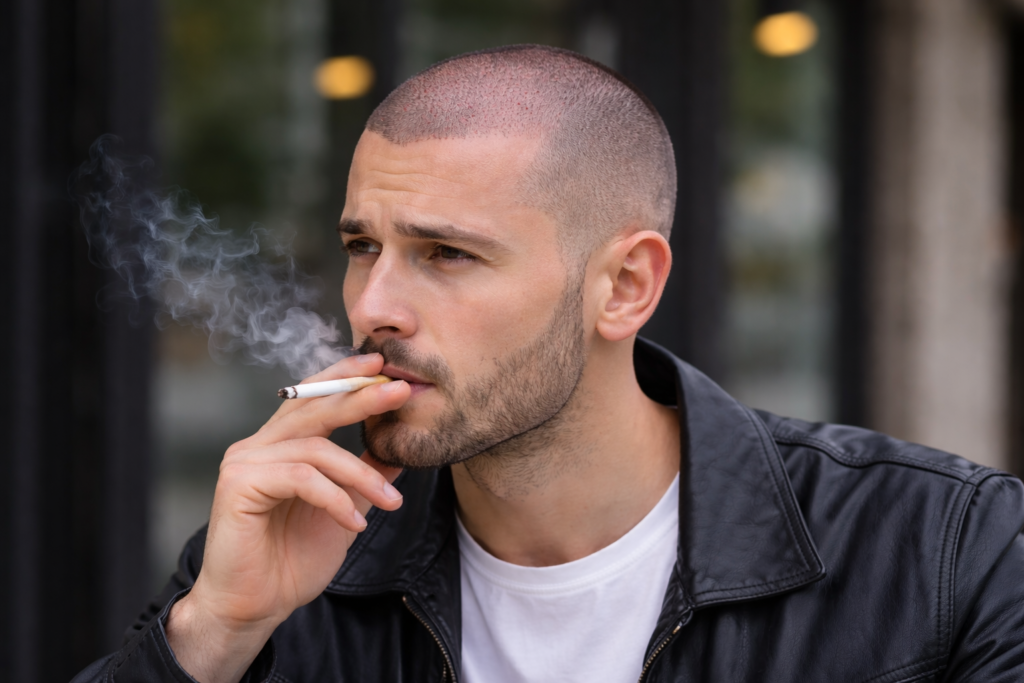
Can You Smoke After A Hair Transplant?
Technically, you can smoke after a hair transplant, but it is strongly discouraged, especially during the early stages of healing. The first few days after the procedure are critical, as newly transplanted grafts rely on a healthy blood supply to survive and anchor into the scalp.
Smoking during this period can interfere with that process. This can negatively affect healing and increase the risk of poor growth or graft loss. While some patients ask whether occasional smoking is harmless, even limited exposure can impact recovery.
For this reason, most specialists recommend avoiding smoking after hair transplant surgery for at least the first 7-10 days, with longer abstinence offering better outcomes.
Does Smoking Affect Hair Transplant Success?
Yes, smoking can negatively affect hair transplant results.
Graft survival is dependent on angiogenesis and adequate tissue oxygenation. Smoking after hair transplant disrupts these processes through vasoconstriction and reduced oxygen-carrying capacity, leading to delayed healing and increased susceptibility to complications.
For patients concerned about achieving the best possible hair transplant results, avoiding smoking before and after the procedure is one of the most important steps to protect graft survival and overall outcome.
How Does Smoking Affect Hair Transplant Results?
Smoking after hair transplant introduces substances such as nicotine, carbon monoxide, and hydrogen cyanide into the body, all of which negatively affect circulation, healing and ultimately hair transplant results.
Reduced Blood Flow to Hair Grafts
Nicotine causes vasoconstriction, meaning it narrows blood vessels. This results in decreased peripheral perfusion and reduced blood flow to the scalp. This limits the delivery of essential nutrients to the grafts, making it harder for them to survive during the early healing phase.
Impact on Oxygen Supply and Healing
In addition to reducing blood flow, cigarette smoke also decreases the body’s ability to deliver and use oxygen effectively. Carbon monoxide lowers the blood’s oxygen-carrying capacity by binding to hemoglobin, while hydrogen cyanide disrupts cellular respiration, resulting in tissue hypoxia and delayed wound healing.
Increased Risk of Graft Failure
Insufficient oxygenation and nutrient supply can impair follicular survival during the early post-operative period, increasing the likelihood of graft failure and suboptimal growth.
Smoking After Hair Transplant: Risks You Should Know
Smoking after hair transplant can introduce several risks that may interfere with the healing process and the success of the procedure.
Delayed Healing and Prolonged Recovery
Smoking after a hair transplant can slow down the healing process because it reduces blood flow and oxygen delivery to the scalp. Since oxygen and nutrients are essential for collagen synthesis and tissue repair, this can delay how quickly the scalp repairs itself. As a result, patients may notice that redness, swelling, and scabbing last longer, and the overall recovery period is extended compared to non-smokers.
Higher Risk of Infection
Smoking can weaken the body’s natural defense system and slow down how well the scalp heals. When healing is slower, the protective skin barrier takes longer to fully form, which can leave the area more exposed to bacteria.
At the same time, reduced blood flow means fewer immune cells and nutrients are reaching the healing tissue, making it harder for the body to fight off potential infection. This combination can increase the likelihood of complications during the recovery period.
Higher Risk of Necrosis
When blood flow is significantly reduced, certain areas of the scalp may not receive enough oxygen and nutrients to stay healthy. This can lead to tissue damage and, in more severe cases, necrosis, where the affected tissue begins to die. While this is a rare complication, it highlights how important proper circulation is for healing after a hair transplant.
Poor Hair Growth and Thinner Results
When the healing environment is not optimal, some transplanted grafts may not fully establish or grow as expected. This can result in decreased graft survival rates and reduced overall density, leading to a thinner appearance than initially planned.
Nicotine and Graft Survival: Effects on Your Hair Transplant
Nicotine can directly influence how well transplanted grafts survive by affecting the scalp’s circulation and the environment needed for healing. These changes can play a significant role in how your hair transplant develops over time.
Vasoconstriction and Its Effects
Nicotine causes blood vessels to narrow, a process called vasoconstriction, which reduces blood flow to the scalp. With less circulation, fewer oxygen and nutrients reach the grafts, making it harder for them to stabilize and heal properly.
Damage to Newly Transplanted Follicles
Because transplanted follicles are especially sensitive during the early healing phase, reduced blood supply can put them under stress. This can weaken their ability to survive and grow, increasing the chances that some grafts may not develop as expected.
How Long After a Hair Transplant Can You Smoke?
Understanding when is it safe to smoke after a hair transplant is important, as timing plays a key role in protecting graft survival and supporting proper healing.
The Critical First 72 Hours
The first 72 hours are the most sensitive period after surgery, when grafts are still stabilizing in the scalp. Smoking during this time can interfere with circulation and healing, which may negatively affect early graft survival.
First 7-10 Days: Why It Still Matters
Even after the initial few days, the healing process is still ongoing, and the scalp remains vulnerable. Continuing to avoid smoking after hair transplant during this period helps support better healing and reduces the risk of compromising results.
Ideal Waiting Period Recommended by Experts
Most experts recommend avoiding smoking for at least 7-10 days after a hair transplant, while some advise waiting longer for optimal results. Following this guidance can improve healing conditions and help ensure the best possible outcome.
What Happens If You Smoke After a Hair Transplant?
Smoking after hair transplant can interfere with the healing process and may impact how well the transplanted grafts establish and grow.
Does One Cigarette Ruin Results?
One cigarette is unlikely to completely ruin your results, but even small amounts of smoking can affect blood flow and healing during this critical period. Consistency matters, and repeated exposure increases the risk of affecting graft survival.
What You Should Do Next?
If you have smoked after your procedure, stop immediately and avoid smoking again for at least the next 72 hours to give your body a chance to recover. Monitor the treated areas closely for signs of complications such as increased redness, swelling, discharge, or fever. If you notice any of these symptoms, contact your clinic promptly.
Continuing to follow your post-operative care instructions and minimizing further exposure to smoke will help support healing and protect your results.
Tips to Avoid Smoking During Hair Transplant Recovery
Staying away from smoking after hair transplant can be challenging, but there are practical ways to make the recovery period easier and support better results.
Practical Strategies for Patients
-
- Keeping yourself busy with work, hobbies, or light activities to distract from the urge to smoke
-
- Avoiding triggers such as coffee breaks, alcohol, or environments where others are smoking
-
- Creating a clear plan for the recovery period to stay committed to avoiding smoking after hair transplant
-
- Making small routine changes, such as altering daily habits linked to smoking
-
- Staying well hydrated to help support the body’s healing process
-
- Closely following your clinic’s aftercare instructions to support better recovery and results
Nicotine Alternatives: Are They Safe After Hair Transplant?
Nicotine alternatives such as patches, gum, or vapes still deliver nicotine, which can affect blood flow and healing. Because of this, they are generally not considered a safe substitute during the early recovery phase after a hair transplant, and it is best to consult your doctor before using any of them.
Smoking and Hair Transplant Success: Before and After Surgery
Smoking plays a role not only after a hair transplant, but also before the procedure and in the long-term health of your hair. Understanding both stages is important for achieving the best possible results.
Why Should You Stop Smoking Before Hair Transplant?
Stopping smoking before a hair transplant helps improve blood circulation and oxygen levels in the body, creating better conditions for graft survival. This can support healing from the very beginning and increase the chances of a successful outcome.
Long-Term Effects of Smoking on Hair Health
Over time, smoking can negatively affect hair health by reducing blood flow to the scalp and weakening hair follicles. This may contribute to ongoing hair thinning due to smoking and can impact the long-term results of a hair transplant.
Expert Advice from Civas&Akpınar: Smoking And Hair Transplant
At Civas&Akpinar Hair Transplant, our dermatologists recommend stopping smoking at least one week before your hair transplant to improve blood circulation and increase oxygen delivery to the scalp, which supports better graft survival. After surgery, smoking should be avoided for at least 7-10 days, as this is the critical period when grafts are stabilizing and healing is actively taking place.
However, our doctors also understand that quitting completely can be challenging for some patients. In these cases, the goal is to minimize smoking as much as possible during the recovery period to reduce its impact on healing and outcomes.
If you would like personalized guidance for your hair transplant journey, contact Civas&Akpınar Hair Transplant Clinic and book your consultation today..
Smoking and Hair Transplant FAQs
Q: How long should I stop smoking before a hair transplant?
A: It is recommended to stop smoking at least one week before a hair transplant to improve blood circulation and increase oxygen delivery to the scalp. This helps create better conditions for graft survival and healing.
Q: When is it safe to smoke again after a hair transplant?
A: Most doctors advise waiting at least 7-10 days after surgery before smoking again, as this is a critical period when grafts are stabilizing and the scalp is healing. Waiting longer can further improve results.
Q: Are nicotine patches or vapes safe after a hair transplant?
A: Nicotine patches, vapes, and other alternatives are not considered safe, as they still deliver nicotine into the body. Nicotine can reduce blood flow and may negatively affect healing and graft survival.
Q: Can smoking reduce hair growth after a transplant?
A: Yes, smoking can impact blood flow and healing, which are essential for graft survival. This can result in fewer grafts growing successfully and may lead to reduced density or thinner results.
Q: Can I smoke weed after a hair transplant?
A: Smoking weed after a hair transplant is also not recommended, as the act of smoking can still affect blood flow and healing. It is best to avoid all forms of smoking during the recovery period to protect your results.
Q: Does secondhand smoke affect hair transplant results?
A: Yes, exposure to secondhand smoke can also negatively impact healing after a hair transplant. Inhaling smoke, even indirectly, can reduce oxygen levels and affect blood circulation, similar to active smoking. This may interfere with graft survival during the critical recovery period.
Q: Should I avoid being around smokers after a hair transplant?
A: Yes, it is recommended to avoid environments where others are smoking, especially during the first 7-10 days after surgery. Limiting exposure to secondhand smoke helps maintain optimal healing conditions and protects your results.